Guide
What Affects the Cost of Pool Resurfacing in South Florida
If you've started asking around about pool resurfacing, you've probably noticed that nobody wants to give you a number over the phone. That isn't evasiveness. Resurfacing is one of those jobs where two pools that look similar from the patio can need very different amounts of work once the water is down and the surface is exposed.
This guide walks through what actually moves the price of a resurfacing job in South Florida, the signs that tell you it's time, and how to compare quotes so you're judging like against like. We won't throw out dollar figures, because any figure that ignores your specific pool would be a guess. What you'll get instead is the checklist of questions that produces a trustworthy number.
The main factors behind a resurfacing quote
Pool size, shape and features
Surface area is the starting point. More square footage of walls and floor means more material and more labor. Shape matters too: a simple rectangle is more straightforward to finish than a free-form pool with tight curves, a deep end that drops quickly, or a vanishing edge. Every step, bench, tanning ledge and sun shelf adds detail work, because those areas are finished by hand and need to blend cleanly into the rest of the surface.
The finish you choose
The interior finish is a major part of the decision. Classic white plaster, quartz aggregate finishes such as Diamond Brite®, and glass-bead (gem) finishes are different products with different material costs and different performance characteristics. Quartz and glass-bead finishes generally ask more of the materials budget than basic plaster, in exchange for added color depth and, in many cases, better resistance to staining and wear. Our companion article, Quartz vs. Glass-Bead vs. Classic Plaster, covers that tradeoff in detail, and our finishes page shows the available colors.
Condition of the existing surface
This is the single biggest unknown, and it's why an on-site look matters. Before new material goes on, the old surface has to be sound. Hollow spots, where the old finish has separated from the shell, need to be removed. Cracks have to be assessed to see whether they are cosmetic or structural. Areas that have been patched over the years may need to be opened up. A pool with a tight, well-bonded old surface is a different job from one where large sections are lifting. A good estimator will tap the surface, look at the waterline and the steps, and tell you what they see.
Tile and coping
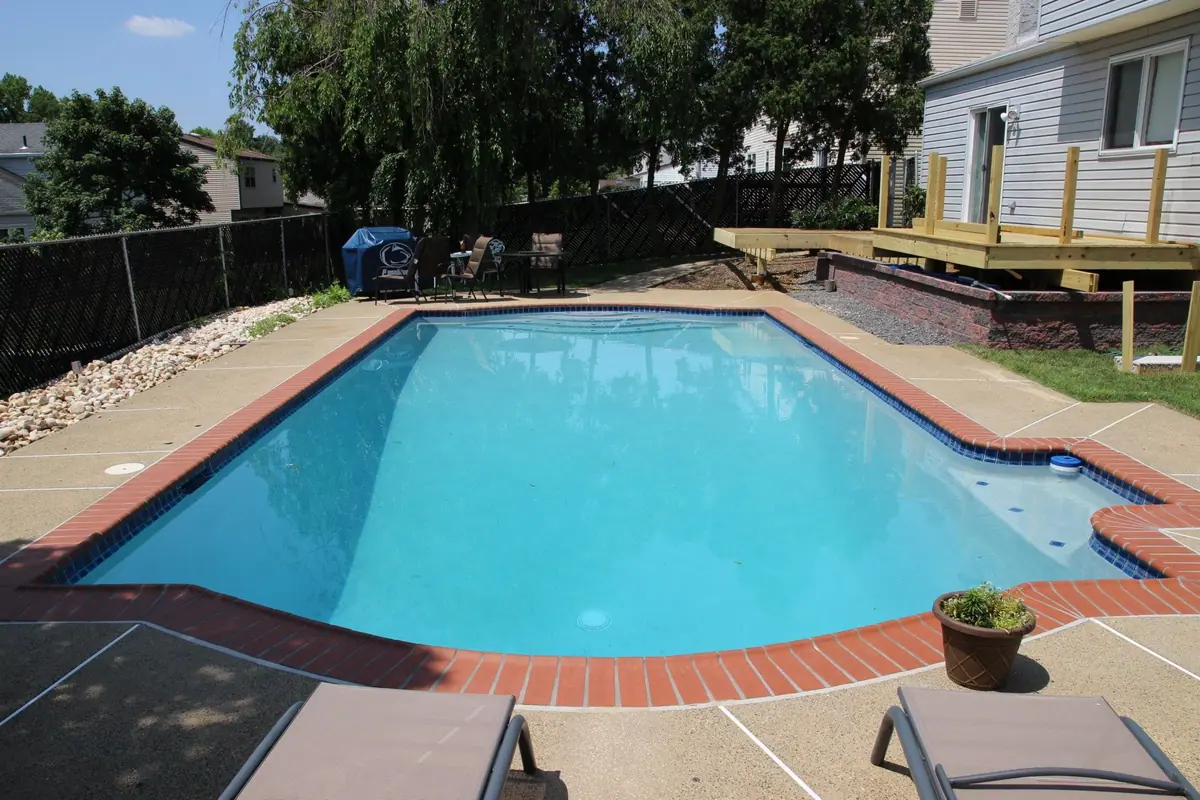
Resurfacing is the natural moment to deal with the pool's edge. Waterline tile that is chipped, loose or covered in scale looks tired next to a brand-new interior, and replacing it later means working around the fresh finish. See our page on waterline tile for how a tile band is done. Coping works the same way. If it's cracked, loose or letting water behind the shell, it's far easier to address pool coping as part of the same project. Whether you include these items, and how much of each, changes the scope and therefore the quote.
Draining, water and refilling
The pool has to be drained for a full resurfacing and refilled afterward. The size of the pool determines how much water that involves, and local water costs and any municipal or district guidelines on discharge and filling can play a role. In some situations, the groundwater level matters as well, since an empty pool can be pushed upward by water in the soil. Ask who handles draining and how, and whether the refill is something you do or something the contractor coordinates.
Access to the backyard
Materials, hoses and equipment have to reach the pool. A wide-open yard with a driveway gate is simple. A narrow side yard, a screen enclosure that limits access, a condo property with a long carry from the loading area, or a pool on an upper level can add time and handling. It's worth telling your estimator about any obstacles up front or letting them see them in person.
Spas, steps, benches and other details
An attached spa, raised spillway, deck jets, LED lights and built-in benches all need attention during resurfacing. Light niches, returns and skimmer throats have to be handled carefully, and any fixture that is aging may be better replaced while the pool is empty. Mention anything you've noticed that isn't working right, because it's cheaper to deal with while the pool is open.
Permits and HOA or condo approvals
Depending on your city or county and the scope of the work, a permit may or may not be required, and many HOAs and condo associations want to review color changes or work schedules. We'll confirm whether your city or county requires a permit for your scope. If your community requires paperwork or a certificate of insurance on file, tell us early so it doesn't delay the schedule.
Commercial schedules and larger surfaces
Hotels, condos, clubs and community pools bring a different set of constraints. Larger surfaces, multiple pools or spas, and the need to minimize closure time all affect planning. Our page on commercial pool resurfacing explains how we approach scheduling around a property's operations.
Signs it may be time to resurface
You don't need to wait for a dramatic failure. These are the common signals that the interior is reaching the end of its useful life:
- Rough surface. If the walls or floor feel sandy or scratchy on bare feet or swimsuits, the surface is wearing away.
- Persistent stains. Stains that return after cleaning and balancing can mean the surface has become porous.
- Etching. Dull, pitted or eroded patches often come from water that has been out of balance for a period.
- Delamination or hollow spots. Areas that sound hollow when tapped, or chips and flakes coming off, mean the finish is separating from the shell.
- Cracks or suspected leaks. Cracks should be evaluated, and unexplained water loss deserves a proper leak investigation before any new finish goes in.
- Fading and discoloration. Strong Florida sun and years of chemicals can leave a once-vibrant color looking washed out and blotchy.
One or two of these doesn't always mean a full resurfacing, but several together usually do. An honest estimate should tell you which category your pool falls into.
How to compare resurfacing quotes fairly
The lowest number isn't always the lowest cost, and the highest isn't always the best work. Two quotes can differ simply because they cover different things. When you collect estimates, make sure each one answers the same questions.
What to ask every contractor
- Which exact finish and color are included, and who makes it?
- How will the old surface be prepared, and what happens if hollow areas are found?
- Is waterline tile included? Is coping included? To what extent?
- Who drains and refills the pool, and what is the startup process afterward?
- What does the warranty cover, who provides it, and for how long? Ask to see it in writing.
- How is the schedule affected by weather, and what is the plan if rain interrupts the work?
- Who handles permits and HOA or condo paperwork, if any are required?
What a good written scope includes
- The pool's approximate dimensions and any attached spa or special features.
- The product, brand and color of the finish.
- Surface preparation steps and how unexpected repairs will be handled and priced.
- Tile and coping details, including the tile type and linear footage if applicable.
- Draining, refilling and startup responsibilities.
- Payment terms, warranty terms and an expected scheduling window.
- Clean-up and debris removal.
If something important is missing from a quote, ask about it. A contractor who is confident in their process will be happy to spell it out. Be cautious about a quote that is a single line with a single number and no description of what is being done.
Why the on-site look matters
Photos help, but a visit lets us tap the surface, check the tile and coping, look at access and talk through color choices with samples in front of you. That's the reason our estimates are free and based on your actual pool rather than a formula. We cover Palm Beach County, Broward County and Miami-Dade County, for both homes and commercial properties.
Once your pool is done, the first weeks matter just as much as the work itself. Read Caring for a New Pool Finish so you know what to expect.